
In today’s digital world, social media has become an essential part of business growth. Platforms like Facebook, Instagram, LinkedIn, and YouTube help businesses connect with customers, promote their products, and build brand awareness. For small businesses with limited marketing budgets, social media advertising offers an effective way to reach potential customers and compete in the digital marketplace.
The benefits of social media advertising go beyond gaining likes and followers. A well-planned advertising campaign can generate leads, increase website traffic, improve customer engagement, and boost sales. Whether you run a local shop, a startup, a service-based business, or an online store, social media advertising can help you achieve your marketing goals.
Let’s explore the major benefits of social media advertising for small businesses and understand how it can support long-term growth.
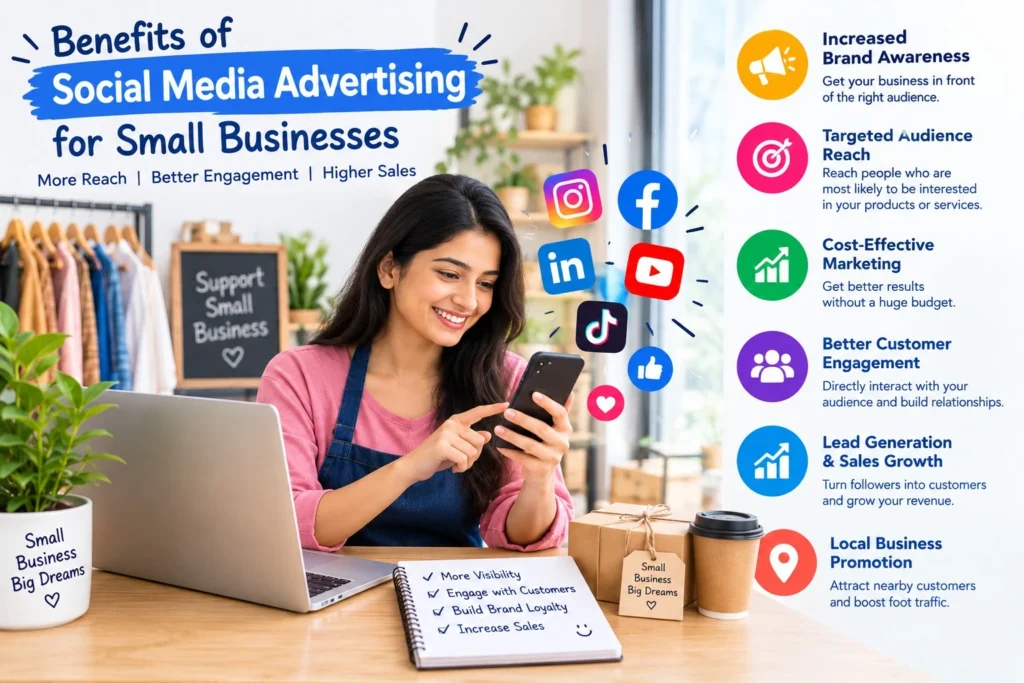
1. Increased Brand Awareness
Brand awareness is one of the most important benefits of social media advertising. People are more likely to purchase from businesses they recognize and trust. Social media advertisements help small businesses introduce their brands to new audiences and make their products or services more visible.
Platforms such as Facebook and Instagram allow businesses to showcase their offerings through images, videos, stories, and sponsored posts. Consistent advertising helps customers become familiar with your business and remember your brand when they need a relevant product or service.
For example, a local clothing store can advertise its latest collection to people in its surrounding area. Similarly, a digital marketing agency can promote its services to business owners who may need help improving their online presence.
2. Cost-Effective Marketing
Traditional advertising methods, such as television commercials, newspaper advertisements, and billboards, can be expensive for small businesses. Social media advertising provides a more flexible alternative because businesses can set their own campaign budgets and adjust spending according to their goals.
You can start with a small budget, test different advertisements, and invest more in campaigns that deliver better results. This approach helps businesses manage their marketing expenses without committing to a large advertising budget.
However, advertising costs and results vary depending on the platform, industry, competition, audience, and campaign quality. A carefully planned campaign is more valuable than simply spending money on advertisements without a clear objective.
3. Targeted Audience Reach
One of the biggest advantages of social media advertising is the ability to target specific audiences. Instead of showing advertisements to everyone, businesses can focus on people who are more likely to be interested in their products or services.
Advertising platforms offer targeting options based on factors such as location, age, interests, and online behavior, depending on the platform and campaign type.
For example, a restaurant can promote special offers to people nearby, while a real estate company can advertise properties to audiences interested in buying a home. A business serving customers in a particular city can also use location-based targeting to reach relevant local audiences.
This targeted approach helps small businesses use their advertising budgets more efficiently and attract potential customers.
4. Better Customer Engagement
Social media advertising creates opportunities for businesses to interact directly with their customers. Unlike many traditional advertising methods, social media allows people to respond to advertisements, ask questions, share feedback, and send messages.
These interactions help businesses understand customer preferences and build stronger relationships. Responding to comments and messages promptly can also improve the customer experience and encourage people to learn more about your offerings.
For instance, a beauty salon can advertise a special service and invite customers to book appointments through direct messages. A local retailer can answer product questions and guide interested customers toward making a purchase.
Consistent communication helps make your business more approachable and customer-friendly.
5. Increased Website Traffic
Social media advertisements can direct interested users to your website, product pages, landing pages, or online store. This gives potential customers an opportunity to explore your offerings in greater detail.
Businesses can create campaigns that encourage people to visit a website, read a blog, download a resource, or view a particular product. Useful landing pages and clear calls to action can help turn advertising clicks into meaningful customer actions.
For example, a service provider can advertise a free consultation and direct users to a booking page. An online store can promote a product and link directly to its purchase page.
To improve results, make sure your website loads quickly, works well on mobile devices, and provides visitors with the information they need.
6. Lead Generation and Sales Growth
Generating qualified leads and increasing sales are important goals for most small businesses. Social media advertising can support both by helping businesses connect with potential customers who are interested in their products or services.
Many platforms provide lead-generation features that allow users to submit their contact details through forms. Businesses can also encourage potential customers to call, send a message, book an appointment, or make a purchase.
For example, a coaching institute can run advertisements promoting course admissions, while a home renovation company can generate inquiries from homeowners interested in its services.
The quality of leads depends on factors such as audience targeting, advertising content, offer quality, and follow-up. Businesses should track not only the number of leads but also how many become paying customers.
7. Improved Brand Credibility and Trust
Customers often research a business online before making a purchase decision. An active and professional social media presence can help establish credibility and make a business easier to discover.
Advertisements can highlight customer testimonials, product demonstrations, service benefits, business achievements, and useful information. These elements help potential customers understand what makes your business different.
Small businesses should ensure that their advertisements contain accurate information and realistic promises. Genuine reviews, helpful content, and consistent branding can contribute to customer trust.
Social media advertising works best when it supports a strong overall online presence rather than relying on paid promotions alone.
8. Measurable Marketing Results
Another important benefit of social media advertising is the ability to measure campaign performance. Advertising dashboards provide data that helps businesses understand how their advertisements are performing.
Depending on the platform and campaign objective, useful metrics may include:
- Reach and impressions
- Click-through rate
- Cost per click
- Leads generated
- Cost per lead
- Conversions and purchases
- Return on advertising spend
By reviewing these metrics, businesses can identify successful advertisements and make improvements where necessary. For example, if one advertisement receives many clicks but few inquiries, the landing page or offer may need improvement.
Regular performance analysis helps businesses make informed decisions and use their budgets more effectively.
9. Competitive Advantage for Small Businesses
Small businesses often compete with larger brands that have greater resources and established market recognition. Social media advertising gives smaller companies an opportunity to reach relevant audiences and communicate their unique value.
A small business can highlight personalized service, local expertise, product quality, convenient delivery, or specialized solutions. Creative advertisements and relevant offers can help a business stand out in a competitive market.
Success does not depend entirely on having the largest budget. Understanding your audience, choosing the right platform, and creating useful advertising content can make a meaningful difference.
By consistently testing and improving campaigns, small businesses can strengthen their position in their respective markets.
10. Local Business Promotion
For businesses that serve customers in a specific area, social media advertising can be especially useful. Local targeting helps businesses promote their services, seasonal offers, events, and new products to people in selected locations.
Restaurants, salons, gyms, clinics, retail stores, and service providers can use location-focused campaigns to increase awareness among nearby potential customers.
For example, a new restaurant can advertise its opening offer to people in the surrounding neighborhood. A local service provider can promote a special package to customers within its service area.
Combining social media advertisements with accurate business information, customer reviews, and a well-maintained Google Business Profile can help improve local visibility.
How to Get the Best Results from Social Media Advertising
To make the most of social media advertising, small businesses should follow a clear strategy.
Define your marketing goals: Decide whether you want brand awareness, website traffic, leads, inquiries, or direct sales.
Choose the right platform: Use Facebook and Instagram for visual promotions and local customer engagement, LinkedIn for many business-to-business campaigns, and YouTube for video-focused advertising.
Understand your audience: Identify your ideal customers, their needs, interests, and purchasing preferences.
Create engaging advertisements: Use clear visuals, compelling headlines, relevant offers, and a strong call to action.
Start with a manageable budget: Test different creatives and audiences before increasing your spending.
Monitor campaign performance: Review relevant metrics regularly and make data-driven improvements.
Follow up with potential customers: Respond to inquiries promptly and guide interested users toward the next step.
A consistent approach helps businesses learn what works and build more effective campaigns over time.
Conclusion
The benefits of social media advertising make it a valuable marketing opportunity for small businesses looking to grow their online presence and attract new customers. From increasing brand awareness and reaching targeted audiences to generating leads, improving engagement, and measuring results, social media advertising offers several ways to support business growth.
However, successful advertising requires more than launching a campaign. Businesses need clear objectives, relevant content, appropriate audience targeting, and regular performance analysis.
By starting with realistic goals, testing different strategies, and optimizing campaigns based on results, small businesses can make better use of their marketing budgets and develop stronger customer relationships.
Whether you operate a local business or an online company, social media advertising can become an important part of your digital marketing strategy and help create opportunities for sustainable growth.